Raised Bed Gardening for Beginners: What to Know Before You Build
Learn the essentials of raised bed gardening: materials, soil, placement, and costs. Practical tips for beginners to start growing successfully.
Raised bed gardening is one of the most accessible ways to start growing your own food. It offers better soil control, fewer weeds, and easier access. But before you build, you need to know what works and what doesn’t. This guide covers the key decisions: location, materials, soil mix, and costs, so you can avoid common mistakes and get a productive garden from the start.
Why Choose Raised Beds?
Raised beds solve several problems at once. They improve drainage in heavy clay soil, warm up faster in spring, and create a defined growing area that is easier to manage. For beginners, the main advantage is soil quality: you fill the bed with a custom mix, so you don’t have to fight whatever is in your yard. Raised beds also reduce bending, which is easier on your back, and they can extend your growing season by a few weeks.
However, raised beds are not for everyone. They cost more upfront than in-ground gardens, and they dry out faster in summer. If you have sandy soil or a very dry climate, you will need to water more often. Also, the initial setup requires some labor. But for most beginners, the benefits outweigh the drawbacks.
Choosing the Right Location
Sunlight is the most critical factor. Most vegetables need at least 6 to 8 hours of direct sun per day. Leafy greens like lettuce and spinach can tolerate 4 to 6 hours, but fruiting crops like tomatoes, peppers, and squash need full sun. Observe your yard for a few days before building. Mark where the sun hits and for how long. Avoid spots under large trees or next to buildings that cast long shadows.
Also consider water access. You will need to water regularly, especially in summer, so place beds within reach of a hose or rain barrel. A distance of 50 feet or less is ideal. Finally, think about convenience: put the garden near your house or a path so you actually use it. A garden that is out of sight is often neglected.
Bed Dimensions and Layout
Size matters. The width of a raised bed should be no more than 4 feet if you access it from both sides, or 2 to 3 feet if it is against a wall. This allows you to reach the center without stepping on the soil, which compacts it. Length can be anything, but 6 to 8 feet is manageable. Depth is crucial: 6 inches is the minimum for shallow-rooted crops like lettuce and radishes, but 12 inches is better for most vegetables, and 18 inches is ideal for root crops like carrots and potatoes. If you are building over concrete or poor soil, go with 12 inches or more.
For layout, leave at least 18 to 24 inches of path between beds so you can walk and kneel comfortably. A typical beginner setup is two or three beds, each 4 feet by 8 feet. That gives you 64 to 96 square feet of growing space, enough for a family of four with careful planning.
Materials: What to Use and What to Avoid
Wood is the most common material. Cedar and redwood are naturally rot-resistant and can last 10 to 15 years, but they cost more. Pine is cheaper but will rot in 5 to 7 years. You can extend pine’s life by lining the inside with plastic, but that can trap moisture. Avoid pressure-treated wood made before 2004, which contained arsenic. Modern pressure-treated wood uses copper compounds, which are safe for gardening, but some gardeners still prefer to avoid it. If you use it, line the bed with heavy plastic to be extra safe.
Other options include galvanized steel, which is durable and modern-looking, but it heats up in the sun, so it may dry out soil faster. Concrete blocks or bricks are heavy but permanent. Recycled plastic lumber is long-lasting but expensive. For a budget option, you can use untreated pine and expect to replace it in a few years.
Avoid using old railroad ties or tires, as they can leach chemicals into your soil. Also, do not use wood that has been painted or stained unless you know it is safe.
Soil: The Most Important Investment
Do not use garden soil or topsoil alone. They are too dense and will compact in a raised bed. Instead, use a mix of 50% high-quality compost, 30% peat moss or coco coir, and 20% perlite or vermiculite. This creates a light, well-draining mix that retains moisture and nutrients. You can buy pre-mixed raised bed soil, but it is often cheaper to make your own. For a 4x8 foot bed that is 12 inches deep, you need about 32 cubic feet of mix. That is roughly 1.2 cubic yards. At a typical price of $40 to $60 per cubic yard for bulk compost, plus $20 to $30 for peat moss and perlite, expect to spend $80 to $120 per bed just on soil.
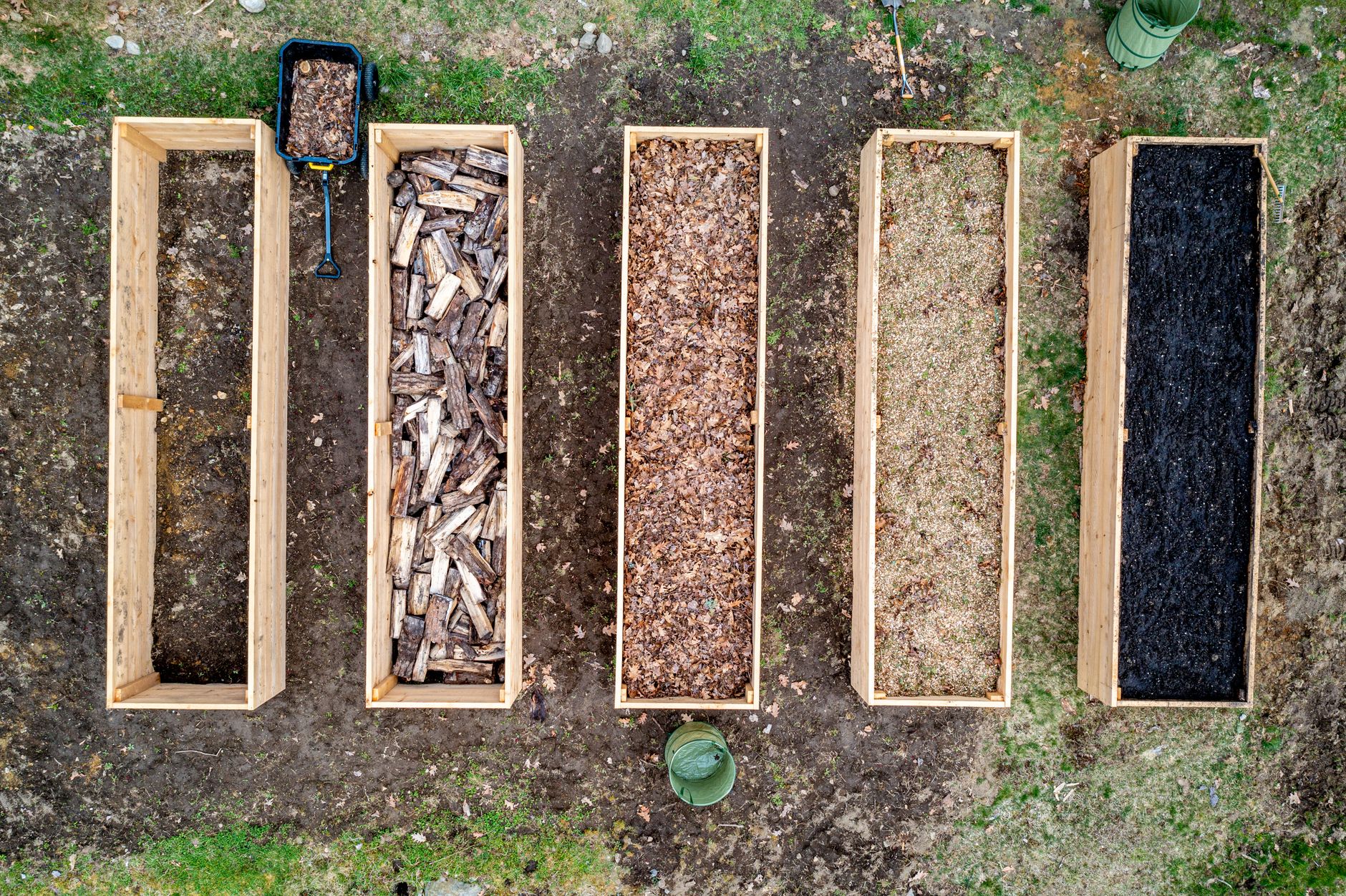
If you are filling a deep bed, you can save money by putting logs, branches, or leaves at the bottom as fill, but this will decompose and lower the soil level over time. A better approach is to use a mix of soil and compost, and top up each year.
Costs and Budget
Here is a realistic breakdown for a single 4x8 foot bed, 12 inches deep, using cedar:
- Wood: 2x6 cedar boards, about $50 to $80
- Corner posts: 4x4 cedar, $10 to $15
- Screws: $5 to $10
- Soil mix: $80 to $120
- Total: $145 to $225 per bed
If you use pine, the wood cost drops to $20 to $30, so the total is $100 to $150. Galvanized steel kits are $100 to $200 per bed, but they last longer. Tools you may need include a drill, a level, and a shovel. If you do not have them, add $50 to $100.
Building Steps You Can Do This Week
- Choose the location and mark the outline with stakes and string.
- Level the ground: remove grass or weeds, and use a shovel to level the area.
- Cut your boards to length. For a 4x8 bed, you need two 8-foot boards and two 4-foot boards.
- Assemble the corners using corner posts or brackets. Use galvanized screws.
- Place the frame in the spot and check that it is level. Adjust by adding or removing soil.
- Line the bottom with cardboard or landscape fabric to suppress weeds (optional).
- Fill the bed with your soil mix. Water it thoroughly and let it settle for a few days.
- Plant your seeds or seedlings.
What to Plant First
For spring, plant cool-season crops like ‘Black Seeded Simpson’ lettuce, ‘Easter Egg’ radishes, and ‘Bloomsdale’ spinach. For summer, try ‘Celebrity’ tomatoes, ‘California Wonder’ peppers, and ‘Provider’ bush beans. These are reliable varieties for beginners. Start with transplants for tomatoes and peppers, and direct sow seeds for lettuce and radishes. Follow the spacing on the seed packet or plant tag. In a 4x8 bed, you can fit 4 tomato plants, 6 pepper plants, or a mix of greens.
FAQ
How deep should a raised bed be?
At least 6 inches for shallow-rooted crops, but 12 inches is recommended for most vegetables. If you are building over concrete, go 18 inches.
Can I use regular garden soil in a raised bed?
No, garden soil is too dense and will compact. Use a mix of compost, peat moss, and perlite.
How often do I water a raised bed?
It depends on weather and soil. In summer, you may need to water every day, especially if the bed is shallow. Check the soil 1 inch down; if it is dry, water.
How long will a raised bed last?
Cedar or redwood can last 10 to 15 years. Pine lasts 5 to 7 years. Galvanized steel can last 20 years or more.
The Bottom Line
Raised bed gardening is a great choice for beginners if you plan ahead. Focus on location, soil quality, and realistic costs. Start with one or two beds, use a good soil mix, and choose easy crops. With proper care, you will be harvesting fresh vegetables in a few months. Build this week, and you will be ready for the growing season.