Candle making ideas for beginners
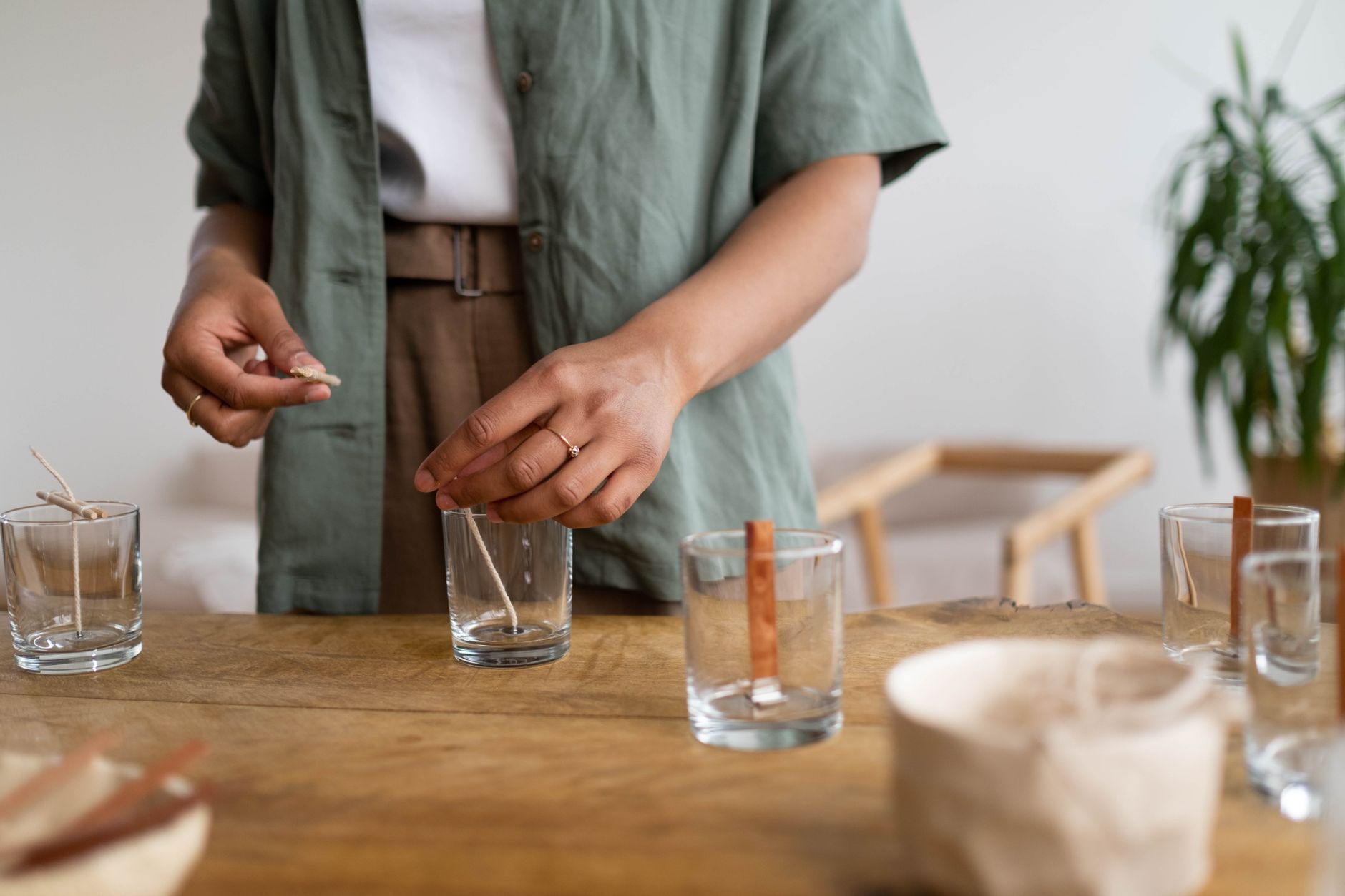
Learn simple candle making for homesteaders: container candles, beeswax wraps, and more. Step-by-step, with costs and safety tips.
If you’re new to candle making, start with container candles: they are forgiving, require minimal equipment, and give you a useful product in under an hour. This guide covers three beginner-friendly projects, the tools you need, and the mistakes to avoid, so you can make your first batch this week.
Why make your own candles?
Making candles at home saves money if you use bulk wax, lets you control ingredients (no paraffin if you prefer soy or beeswax), and gives you a practical skill for gifts or barter. A 16-ounce soy candle costs about $2.50 to make at home versus $10 to $15 in a store. Fo
 r homesteaders, beeswax from your own hives is a bonus, but even store-bought beeswax is a good option.
What you need: tools and materials
Start with these basics. You can find most items at a craft store or online. Prices are 2026 estimates.
| Item | Purpose | Cost (USD) |
|---|---|---|
| Double boiler or large pot + heatproof pitcher | Melting wax safely | $15-$30 |
| Thermometer (candy or infrared) | Monitoring wax temperature | $10-$20 |
| Soy wax flakes (464 or 415) or beeswax | Main wax | $15-$20 per 10 lb bag |
| Candle wicks (cotton, pre-tabbed) | Burning | $5-$8 per 100 |
| Wick stickers or glue dots | Attaching wick to container | $5 per pack |
| Containers: mason jars, tins, or heatproof glass | Holding the candle | $1-$3 each |
| Fragrance oils (optional) | Scent | $5-$10 per 2 oz bottle |
| Pouring pitcher (if not using a pot) | Clean pouring | $10-$15 |
You do not need a dedicated candle-making kit; a clean tin can in a pot of water works as a double boiler. Just never melt wax directly on a stove burner: it can overheat and catch fire.
Project 1: Simple soy container candle
This is the best first project. Soy wax is forgiving, cleans up with soap and water, and burns longer than paraffin.
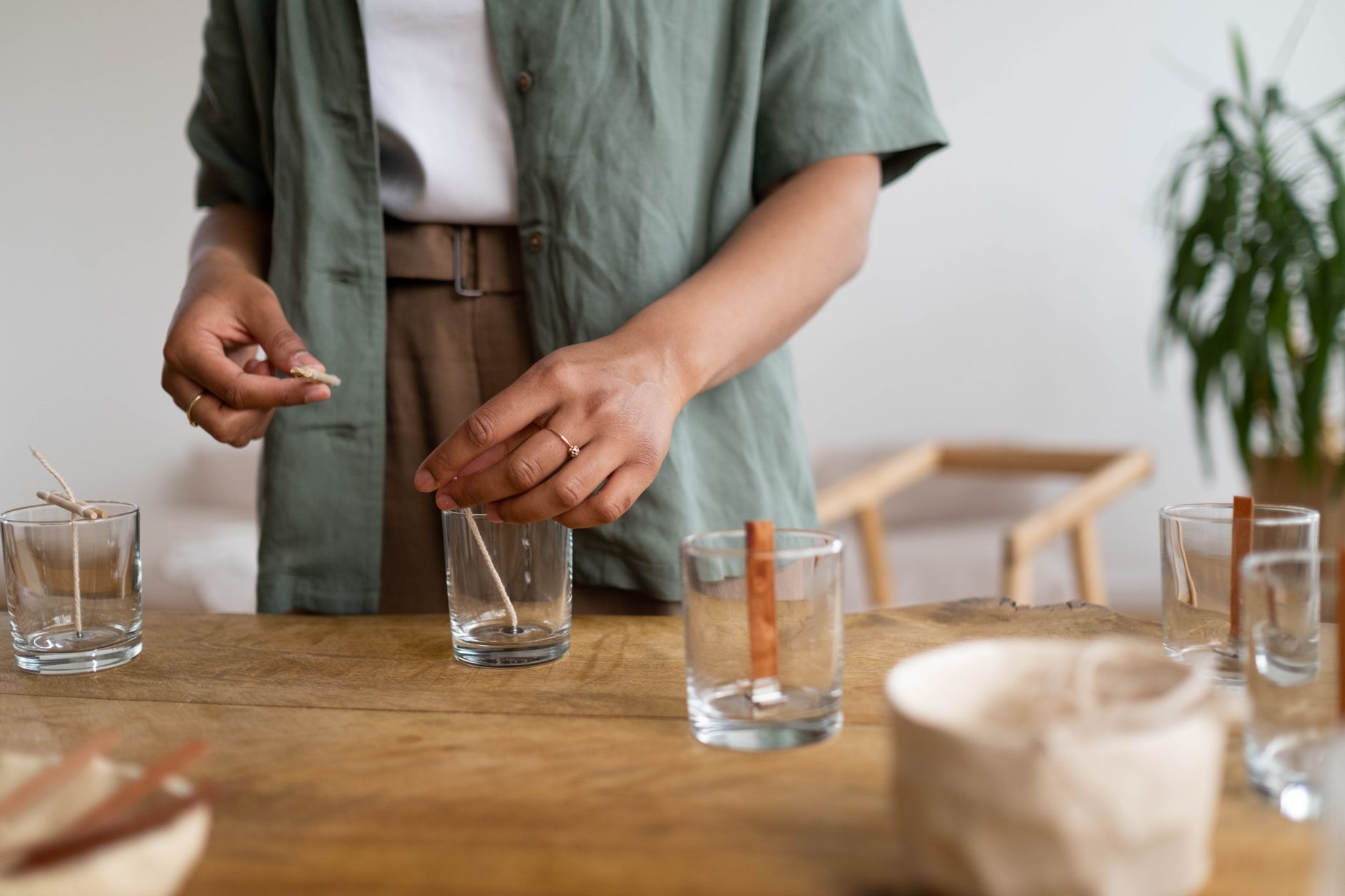
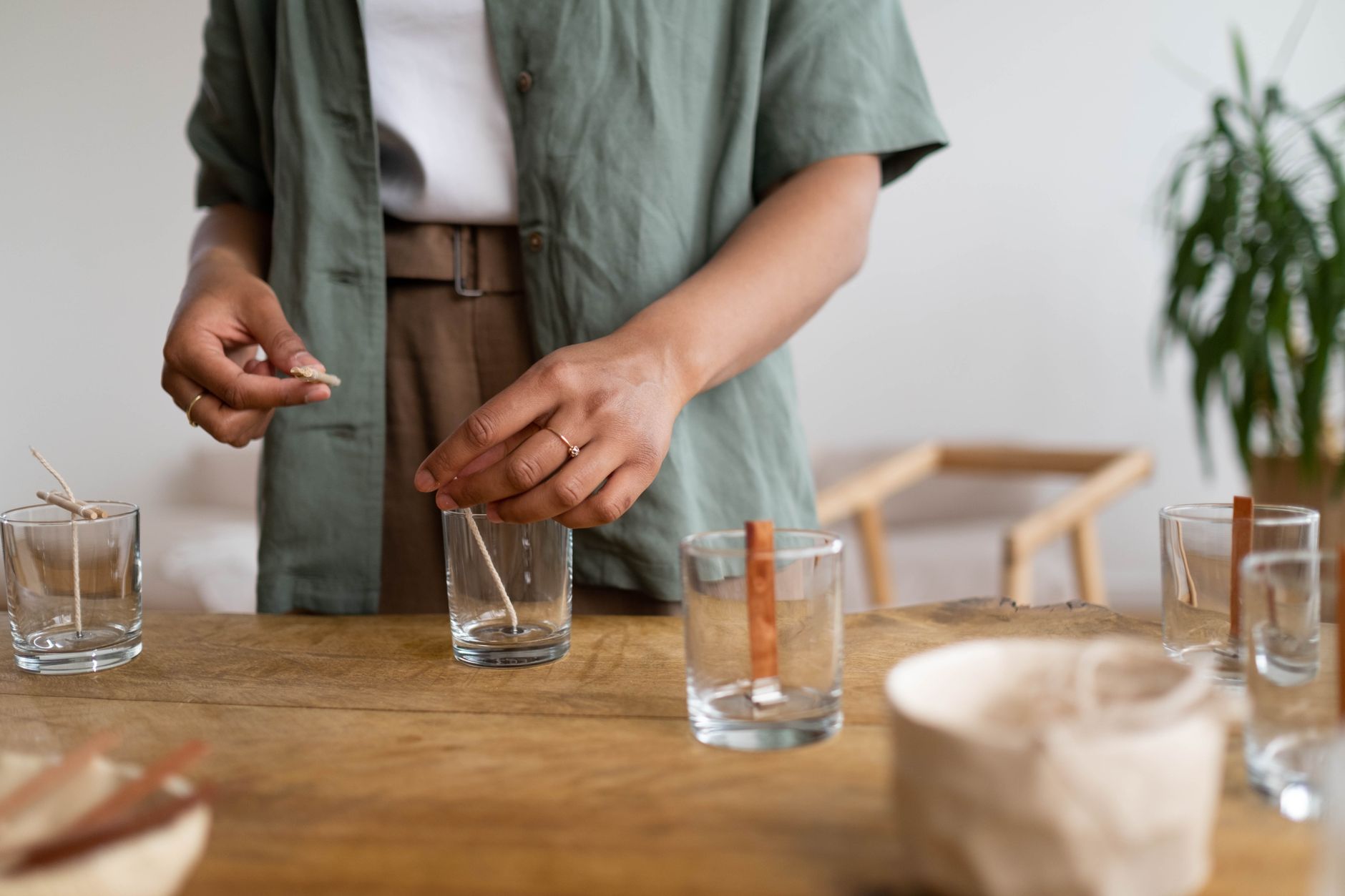
- Prepare the container. Clean a 8-ounce mason jar or tin. Attach a pre-tabbed wick to the bottom center using a wick sticker. Use a pencil or skewer to hold the wick upright.
- Melt the wax. Fill a pot with 2 inches of water, place a heatproof pitcher or tin can inside, and add soy wax flakes. Heat on medium, stirring occasionally, until wax reaches 185°F (85°C). Do not exceed 200°F.
- Add fragrance (optional). Once melted, remove from heat and let cool to 160°F (71°C). Stir in 1 ounce of fragrance oil per pound of wax (about 6% by weight). For a 8-ounce candle, use 0.5 ounce of oil.
- Pour. Let the wax cool to 135°F (57°C) and pour slowly into the container, leaving 1/2 inch headspace. Tap the container to release air bubbles.
- Let it set. Allow the candle to cool completely for 24 hours. Trim the wick to 1/4 inch before lighting.
Yield: One 8-ounce candle. Burn time: 40-50 hours. Cost: about $2.50 per candle.
Project 2: Beeswax rolled candles
If you have beeswax sheets, this is a no-melt project that takes 10 minutes. It is ideal for kids or as a quick gift.
- Lay a beeswax sheet (8x16 inches) on a flat surface. Place a pre-tabbed wick along one long edge, leaving 1/4 inch sticking out.
- Fold the wax over the wick and press firmly. Roll the sheet tightly, keeping the edges even. Apply gentle pressure as you roll to seal the layers.
- Press the bottom edge to flatten it slightly, so the candle stands upright. Trim the wick to 1/4 inch.
Yield: One rolled candle, about 1 inch diameter. Burn time: 10-15 hours. Cost: $1-$2 per candle, depending on sheet price. These candles are best used on a candle holder or tray, as they can drip.
Project 3: Beeswax and coconut oil lotion bars (not a candle, but a bonus)
This is not a candle, but it uses the same melting skills and makes a great gift for gardeners with dry hands. Combine 1 part beeswax, 1 part coconut oil, and 1 part shea butter. Melt gently, pour into silicone molds, and let cool. Use within 6 months. This is a separate project, but it shows you how to reuse your candle-making setup.
Safety and troubleshooting
- Always use a double boiler. Never melt wax in the microwave or directly on a stove. Wax can ignite above 200°F.
- Keep a lid nearby to smother a wax fire if it happens. Do not use water on a wax fire.
- If your candle sinks or cracks: the wax was poured too hot or cooled too fast. Pour at 135°F and let cool slowly at room temperature.
- If the wick drowns: the wick is too small for the container. Use a larger wick (e.g., CD-10 for a 3-inch diameter container).
- If the candle has poor scent throw: you added too little fragrance or the wax was too hot. Use 1 ounce per pound and add at 160°F.
Where to buy supplies
For soy wax, wicks, and fragrance oils, check online retailers like CandleScience, Bramble Berry, or Amazon. Local craft stores often carry beeswax sheets and basic kits. For beeswax, buy from a local beekeeper or a farmers market; expect to pay $10-$15 per pound in 2026.
FAQ
Can I use old jars or tins? Yes, as long as they are heatproof glass or metal. Clean them thoroughly and check for cracks. Avoid plastic containers.
How do I choose the right wick? For a 3-inch diameter container, use a CD-10 or CD-12 cotton wick. For a 4-inch diameter, use CD-16. If the flame is too small, go up a size; if it smokes, go down.
How long do candles last? Soy candles last 40-50 hours for an 8-ounce size. Beeswax rolled candles burn 10-15 hours. Store candles away from direct sunlight to prevent fading.
Can I use essential oils instead of fragrance oils? Yes, but essential oils are more expensive and may not hold scent as well. Use 0.5 to 1 ounce per pound of wax, and test for scent throw.
The bottom line
Start with a simple soy container candle: it is cheap, forgiving, and gives you a usable product in a day. Once you master that, try rolled beeswax candles for a no-melt project. Always prioritize safety: melt wax gently, never leave it unattended, and keep a lid nearby. With $30 in supplies, you can make a dozen candles for gifts or your own use, and you will have a skill that pays for itself over time.